
What Are You Giving? An Interview with Leslie Ayvazian

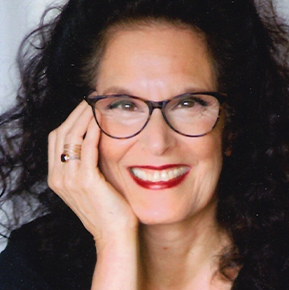
Though Leslie Ayvazian started her career as an actor with appearances both on and off broadway and in film and television. She felt drawn to writing from her earliest memories. For Ayvazian, writing stories and putting them on stage is more than a job: it’s a calling. Ayvazian, whose family survived the Armenian genocide, feels a strong sense of mission to tell not only her story but to be a representative for the Armenian people. Her first show, the multi character show Nine Armenians, garnered numerous awards including the John Gassner/Outer Critics Circle Award for best new American play and the Roger L. Stevens Award. She has also created several solo shows. Her current solo piece Mention My Beauty runs at NY Theatre Workshop’s In the Brick’s Series through June 14th.
Wendy-Lane Bailey: How did you pivot from being acting to writing?
Leslie Ayvazian: I always felt I could write, even as a little kid, I felt that. I was working as an actress, then I had a baby, and I didn't wanna be on stage eight times a week. So what am I gonna do? I wrote my first play Nine Armenians.
It was dedicated to my ancestors because I felt I could contribute that to the Armenian struggle, to the Armenian suffering by just acknowledging. I think not being acknowledged is the hardest thing that can happen to you. As a teacher, the best thing you can do is listen. It isn't about fixing, it's about listening. And the Armenian population was not listened to. If we're going to try to make it right, then we have to find a way to tell the story to however large a group is.
I wrote Nine Armenians in five weeks with my son in a basket at my side. I would take the paper I was typing and throw down the pages I didn't like, and he would play with that. When I finished it, I carried it around like a child on my shoulder, thinking I have made my contribution.
It had a lot of success, that play. The Armenians turned out in droves to support it. The New York Times, in their review of the play, for the first time said genocide without using the word alleged. That is the first time it happened. I became a representative in a certain way. That was a lot of work, to quickly write another play, to stay in that position, to do a lot of speaking, to get a television show, to get the play on Broadway. All of that was overwhelming. In certain ways, I stepped back from it, but never left it. Every single thing I write includes it, everything. In one way or another, the story is there, because it isn't any longer my story. It's so vast.
I've actually gone back to Nine Armenians. I've reworked it, and it looks like it's gonna have another life. Thirty-seven years from its birth, it looks like it's gonna come back. This time I am planning on not casting all Armenians. I want it to be a diverse cast, because that's the story now. Genocide is everywhere. I feel that the story that I've been telling solely for the Armenians must be expanded at this point. If I'm gonna do any speaking or any directing or any of the things that I do, it must be expanded.
WLB: I want to shift to Mention My Beauty and I want talk about clothes for a minute. Because I love clothes, but also because I've always been interested in clothes as psychology, clothes as a creative expression. There is a thread running through the show that deals with clothing, and you use it very intentionally. There are critical moments of transition in the show when you talk about what you wore. How has what you wore defined various parts of your life?
LA: The show is called, Mention My Beauty. Clothes are part of that. Beauty was my ticket, and when I walked in a room, I needed people to tell me I was pretty. I wasn't comfortable until someone said, you look great. So what I wore was my ticket. How did I get attention? How did I get what I needed was, I'm pretty, right? I'm pretty, right? That's why the thread, and it does go all the way through.
It's also the reason I wear something so simple. Because I want you to be able to imagine on me what those things are. They define the decade of what it was to wear girdle in eighth grade with a garter belt and stockings to school. What kind of torture is that for a young girl? So it's all about the clothes. They define us, but they also torture us.
The fact that I dress the way I dress the first day I met Barbara at the settlement house, she never forgave me for that. What was I trying to do? The clothes were too tight, too sexy. I was never forgiven in two years. What I look like goes very much in hand with my insecurities, my neediness, my place in the room, my place in my life.
People bring up that I talk about clothes a lot. I've taken some of it out because I think it is an experience, particularly for the women to imagine. Everything I do is women-based. How do we get to know each other better? How do we get to know ourselves better because the world needs us to? We need to have more power. And more influence.
WLB: Absolutely, and that leads me into my next point because one of the things that you say that really made me stop and think was that the sexual revolution preceded the women's liberation movement. There’s a casual sexism that permeates the show - the driver's ed teacher insisting someone sit on his lap, the fact that you were taught to defer to older, more powerful men. This piece is very much about your awakening to what the world around is like for women. What was the key for you, once your eyes were opened, to claiming your power and pushing against that system?
LA: I don't know that there is a key. What I think is there is, is unfolding. I think that at a very early age, I had feelings about men having different lives than women. My father was the head of the household, period, end. He suffered from addiction and didn't always make the wisest choices. What actually happened in the household was very feminine based, but undercover and quiet. I always felt I had more to say than I was invited to say. I found my way and I, by just testing it, by speaking truth to power, by doing the best I can to be honest and self-observant and recognizing when I was allowing myself to be manipulative, subservient, submissive. I had some real clumsy attempts. I lost jobs. There are directors out there who will never work with me again because I just did not want to play the woman that way. There's a cost.
The number of times I have said, you wouldn't say that to me if I were a man. That sentence alone, no one hears anymore. Everyone just wrinkles their brow, yet it is so true. They wouldn't say that to me if I were a man. And so I still say it, even though I know it's hitting a wall, it's not changing anything for me or making my life better, I still say it.
I'm talkative, I've always been talkative. My work reflects it, all of it. I continue to write
things that are in your face a little bit. But that's where we land, isn't it? When we start feeling what ground do we really stand on? What are our values really? What are we willing to risk? Are we willing to be fired? Are we working in a way that doesn't feel right to us?
I have to say that I have been fortunate in the man I married. We married young and we married impulsively. He was very young and I had a nervous breakdown afterwards
because I didn't think I was good enough for him. I have a son and these two men are remarkable. Men who allow their intuition to help them, men who allow women to be vibrant, God bless them. Patriarchy still prevails. Even in situations where women are in control, the patriarchy prevails because it's in us. I'm very, very lucky that I have the man I have by my side. We've been 50 years together and we have an incredible boy who's a man now.
WLB: My husband and I have been together three decades and it's that choice of partner that makes a huge difference. He's never said to me, “Why can't you be an accountant? Why can't you be somebody normal?” He supports what I do.We have been as equal as we have possibly been able to be in a lot of ways. I see the marriages of my peers and I don't see that a lot.
LA: Me neither. And I'm sorry about it. I don't know what the disconnect is. I don't know that we're getting closer to figuring out what is intimacy, what is trust, what is a lifelong vow to go through it all together?And I think we were so beat up by the pandemic that we're really still just twisting around, where do we belong? How do I learn? And I don't know that the direction we're going in is opening us up further.
WLB: No, and what's interesting is as I watched your show, I'm thinking, we need more shows like this because we are slowly backsliding. We need this kind of inspiration to help us keep pushing forward.
LA: Last night was opening night and I was really moved by what happened at the party, what the young women were telling me, what it is that they felt that they could speak to and have based on what their interpretation of the show was.
WLB: You are ruthlessly honest in this show. You talk about having an illegal abortion and its disastrous consequences. You talk about being estranged from your college roommate, Cindy, and how you’ve spent years trying to heal the breech. Will you speak about the challenge of writing and putting these things on stage?
LA: It's one of those very fine lines, I feel. Very hard to do. I don't really know why it's important to me to do that and how I choose what I'm gonna say and what I don't say. There are things that have happened to me that are not on stage. Very dark things are not on stage, because it would go too far and I wouldn't be able to come back from it, both as a performer and as an audience member. So it's a selection of what I choose.
People say to me, “you're so brave”. I have to tell you, I don't feel brave. I just feel like this is what I got. It's what I say at the very top of the show. “Thank you for giving us space to give what we've got.” That's my style, that's my writing, it's the voice inside me. It's what I think about in the shower, that I am going to do the best to be authentic. That's a little different than being honest. It is authentic. When I'm on stage, you know that about me pretty damn quick. On stage, you can trust me and relax. It's just part of my makeup. I'm a bit of a
soldier. I'm a bit of an Amazon. I'm gonna pick up the sword. I'm not saying that I'm excellent at it. It's just what my motor is, what I drive. It's not even about good, bad, excellent. It's about the moving forward and the keeping doing it. Because that's how you get excellent at it.
What do we contribute? That's the whole deal with life. What do we give? It's not what we get. It's how we cultivate ourselves so that we're strong enough to give, just give. Certainly as artists, that's the whole deal. It's what we have to give and it's exhausting. And it's a tight rope walk. It's athletic because we actually have to be fit in whatever way, spiritually, emotionally, health-wise. I work real hard at that. There was a while when I was just crazy nuts about not caring for myself. I had a full out nervous breakdown. I couldn't go outside. I find a way to keep myself strong enough so that I can be alert and give what I have.
WLB: One of the other things you speak candidly about is that you were the Pretty One, your next sister was the Smart One, and your third sister was the Athletic One. This is often a pattern in families where you get these labels young and they last a long time. How did that affect how you saw yourself? And then how were you able to shift that narrative?
LA: That took a while, darling. I couldn't stand on the smart territory. That was hers. My middle sister is very smart. She has five post-grad degrees. She's super smart and very organized and remarkable. I knew I was not like her. First of all, I had learning disorders and no one ever diagnosed that until very recently. I appeared to be the lucky one to be the pretty one, but that it was actually the flimsiest ticket. People liked being with me just because I was pretty. But in terms of it, it being something that actually made me feel solid inside and capable, I had a deep, deep feeling that I wasn't smart. I was faking it. I was doing the appearance of being smart, which is different. It's different than actually being able to read a history book and remember the entire thing as my sister could do and write long essays about it and get into Harvard and Yale. I barely got into school at all and I barely stayed in school. So I operated on charm. That's how I got anything, was charm. And I knew that was flimsy, which is ultimately the reason I had a total nervous breakdown.I didn't trust that I had the architecture inside to hold me up. The truth is to crawl to the fact that I discovered that I actually have something to say was a long and bloody journey. I was on my knees for a while. And I think if I hadn't met Sam, I don't know if I'd be alive. I don't know.
WLB: What do you feel that solo theater has to offer in this current moment? What does it add to our conversation?
LA: In some ways, I think it's just an economically good idea, which is part of the reason I did it. I thought, okay, let's just boil it down to how can we spend the least amount of money and have the best time? That's important. I also feel for any artist who is thinking about doing a solo show, try, just try. There are so many positives to it. And it is remarkable, it's like flying at a different altitude when you're out there. It's flying with the blue angels. It's entirely up to you what happens. That's a good thing to own. I think there are more solo shows now than any time that I can recall in history. I think they're based on what I'm saying right now, economics and desire. If you want to keep working as an actor, make it work for you. Make it work, write your thing, write your story. Don't wait to figure out if you're going to be understudying Jane Fonda, which I got offered and didn't do. I became the understudy person to go to, and that wasn't satisfying for me. I didn't like repeating a performance that someone else created. I didn't like it. As soon as I could get out of the financial responsibility, I left it and never went back.
You can impact your audience. And it's up to you to decide to be strong enough, prepared enough, and work at it enough. It’s like going to the gym. It's going the imagination gym to figure out what you have to give and how are you going to give it? And it's up to you to choose that. And that's a worthy question in this life. If you're an artist, what are you giving? How are you reflecting human behavior?
WLB: I have one final bonus question for you. What artists have inspired you the most?
LA:Anna Deavere Smith is the first person that turned about for me when I realized that she was going around interviewing people and then becoming them on stage. That was the first opening when I saw her work and when I read her work. I still return to the way she does it. It's not the way I do it. I don't do characters. I don't interview them and then in some way inhabit their stories. But the fact that she opened the door to it made me feel like if she can
do this her way, then what is my way? I do the best I can to read as much as I can and see as many plays as I can. But I have to give full credit to her. She was the one that lit the candle for me.
Also, Whoopi Goldberg walking out on stage on Broadway being directed by Mike Nichols to do what she believed in. So she also, and relatively at the same time, these two women impacted me the most. Both of them were brave. What they chose to do and reveal about themselves alone on stage as women.
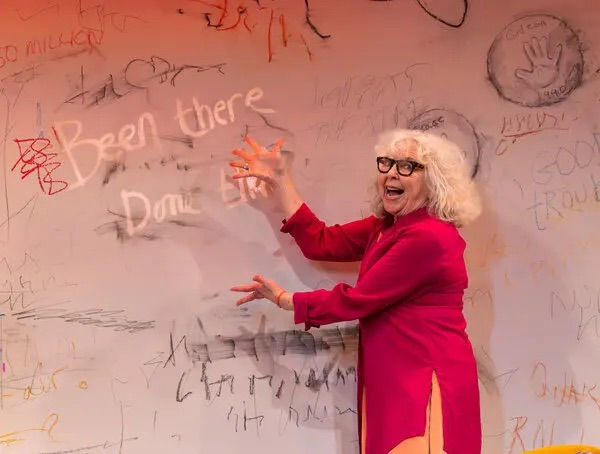
Leslie Ayvazian's current solo piece Mention My Beauty runs at NY Theatre Workshop’s In the Bricks Series through June 14th.


10.0.0.0.1 is commonly searched by users looking for router administration information. Learn how to verify the gateway, access compatible settings, configure wireless options, manage network credentials, and troubleshoot common login or connectivity problems.
Listening rather than fixing: Ayvazian emphasizes slope run the role of listening in teaching and composing.
좋은 서비스는 이용하는 과정에서 자연스럽게 만족감을 느끼게 되는 것 같습니다. 이번에도 처음부터 끝까지 편안하게 진행되어 긍정적인 인상을 받았습니다. 상담을 진행하면서 상품권매입 관련 내용을 이해하기 쉽게 설명해 주었고 처리 과정도 매우 신속했습니다.
If anyone enjoys physics-based driving games, Drive Mad is worth trying. The vehicle balance changes just enough to keep every stage interesting.
평소 생활비를 조금이라도 아끼고 싶어 이용해 봤는데 기대 이상으로 편리했습니다. 결제 전 비교해 보니 혜택이 있어 부담을 줄일 수 있었고 사용 방법도 쉬워 누구나 편하게 컬쳐랜드할인 활용할 수 있겠다고 느꼈습니다.